FPI is committed to preventing and reducing air pollution from its operations through continuous improvement of production processes and pollution control systems. Key measures include improving air pollution treatment efficiency, dust collection and air treatment systems, using cleaner energy, inspecting pollution control equipment, and conducting regular environmental quality monitoring.
FPI improved its waste scrubber system by installing six Variable Speed Drives (VSDs) on Scrubber, enhancing air pollution control, improving air treatment efficiency, and increasing the system’s ability to capture pollutants from production processes.
| Investment |
Energy Saving |
Cost Saving |
| THB 7.40 million |
531,028 kWh/year |
THB 2.12 million/year |
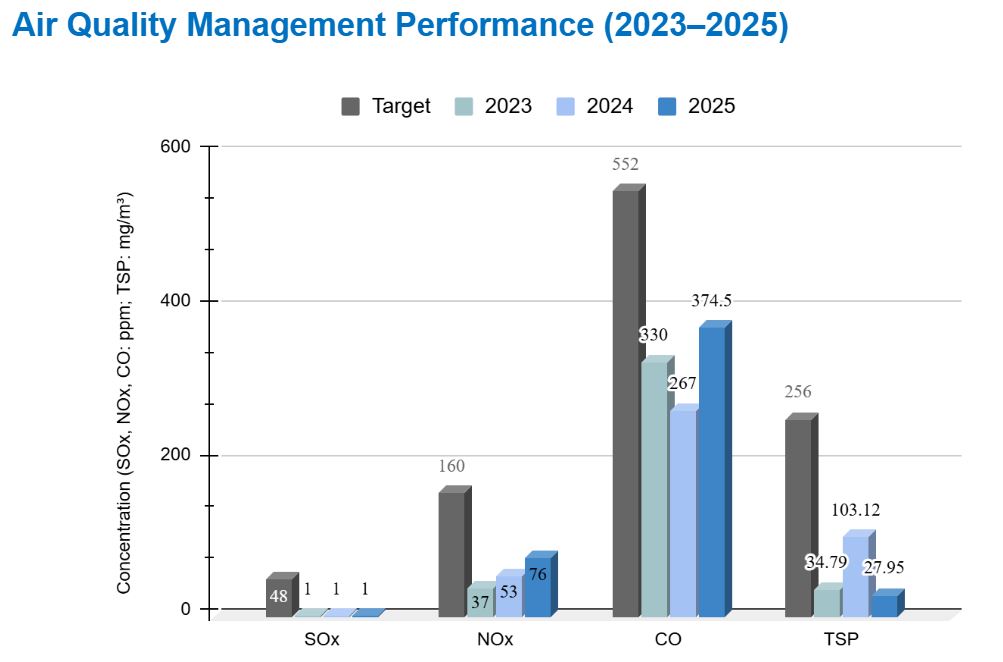
The Company has established a quantitative air pollution reduction target beyond regulatory requirements to maintain emissions of Sulfur Oxides (SOx), Nitrogen Oxides (NOx), Carbon Monoxide (CO), and Total Suspended Particulates (TSP) at least 20% below applicable legal standards. Environmental quality monitoring is conducted twice a year to track performance against the established targets, identify areas for improvement, and support the continuous enhancement of air pollution prevention and control measures